
Louise Roe and the Sculptural Architecture of Memory
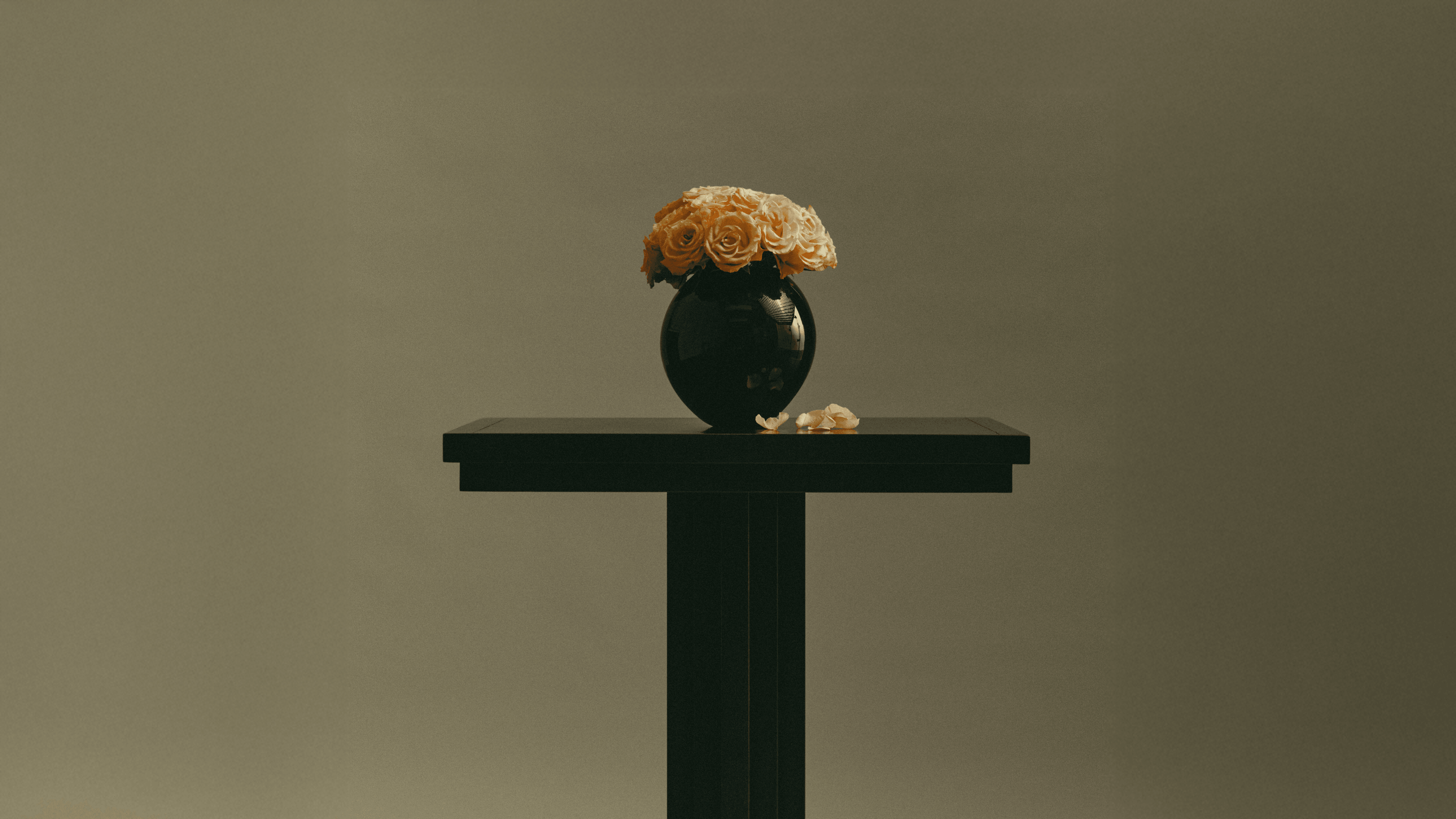
Image courtesy the artist.
Through a dialogue of ancient European craftsmanship and Copenhagen minimalism, Louise Roe explores the weight of stone and the breath of glass in a new series of limited-edition objects for Edition Solenne.
In the heart of Copenhagen, the work of Louise Roe functions as a bridge between the visceral weight of history and the clear light of the present. While many contemporary designers focus on the frictionless and the ephemeral, Roe has spent over a decade building a practice rooted in the permanence of natural materials and the gravity of sculptural form. Her approach is one of quiet intensity, where an object is not merely an addition to a room but a stabilizing force that invites a slower, more considered way of living. This philosophy has culminated in a specific collaboration with Edition Solenne, where Roe has pushed her material explorations into the realm of the collectible, focusing on the fundamental dualities of stone and glass.
Roe occupies a unique position in the Danish design landscape. Rather than adhering strictly to the rationalist functionalism that defined much of the 20th-century Scandinavian output, she looks further afield, drawing on the heavy geometries of Brutalism and the ornate elegance of early Art Deco. In her hands, these disparate influences find a common language through craftsmanship. Whether working with the master carvers of Pietrasanta or the glassblowers of Holmegaard, she seeks to capture a sense of vitality that feels grown rather than manufactured. For Roe, design is a sensory experience; it is not enough for a vessel or a table to perform its duty, it must also touch the senses and leave a memory that stays, long after the initial encounter.
The works released with Edition Solenne, the Collecta Verde and the Amphora Vase, represent a refinement of these lifelong fascinations. These pieces are not consumer products in the traditional sense but are instead studies in materiality and time. They are objects that demand to be touched, carried, and felt, recording the history of the earth in their veining and the breath of the maker in their bubbles. In this editorial, we examine the origins of Roe's practice, her rejection of the 'true Dane' archetype in favor of a broader European sensibility, and the specific artisanal processes that bring these limited-edition works to life.
Origins and the Fashioned Eye
Louise Roe's path to furniture and object design was not the traditional trajectory through a school of architecture or industrial design. Instead, her route began in the fashion industry, where she studied concept development. This background remains an essential lens through which she views the physical world. In fashion, the relationship between the body, the material, and the silhouette is paramount. One must understand how a fabric drapes, how a seam defines a volume, and how a garment changes the way a person moves through space. Roe has translated this sensitivity to the domestic sphere, treating a room as a silhouette and an object as a garment for the home.

Her early years were marked by a keen observation of natural systems and historical curiosities. She recalls being inspired by her childhood garden, watching how her mother arranged variety and how the landscape grew and changed over time. A specific apple tree outside her window became a study in proportion, guided by nature rather than human intervention. These early visual marks were supplemented by visits to her grandparents' house, where she became curious about antiques. She would wonder why they looked the way they did and what specific purpose they had been made for, developing an early appreciation for the lifespan of objects and the way they accumulate meaning through use.
When she founded her eponymous brand in 2010, this background in fashion allowed her to approach the world of interiors with a different set of priorities. While industrial designers might prioritize efficiency or mass production, Roe’s focus was on the 'lifestyle', a word she championed long before it became a marketing buzzword. She understood that creativity rarely exists in neat categories. The coffee one drinks, the chair one sits in, and the clothes one wears are all part of a single, continuous atmosphere. This holistic view led to the opening of the Louise Roe Gallery in 2018 in central Copenhagen, a space that functions as a combined concept store and café, allowing her designs to be lived with rather than just looked at.
The Practice: Beyond the True Dane
Despite being based in the heart of Copenhagen, Louise Roe often identifies as an outsider to the rigid traditions of Danish modernism. In several reflections on her work, she has noted that she does not see herself as a true Dane in the traditional design sense. This is not a rejection of her heritage but rather an expansion of it. While she appreciates the clean lines and rational simplicity of the Danish tradition, she finds it insufficient to capture the depth of emotion she wishes to convey. Instead, she looks to the broader history of Europe, seeking a warmer, more atmospheric aesthetic.
Her oeuvre is a dialogue between the masculine and the feminine, or more precisely, between the rational and the decorative. She is deeply fascinated by the decades of the 1920s and 30s, a period that saw the collision of Art Deco and the Bauhaus. From the Bauhaus, she takes the lessons of clarity and proportion, ensuring that every object has a structural integrity that justifies its existence. From Art Deco, she borrows the celebration of luxury, glamour, and master craftsmanship. The friction between these two movements, one celebrating ornamentation and the other championing function, is where Roe finds her creative center.
I don’t really see myself as a ‘true Dane’ in the traditional design sense. I like combining the clean lines of Danish design heritage with more warmth, emotion and atmospheres inspired by the history of Europe.
This internationalist perspective is reflected in her choose of materials. She avoids the 'quick fix' of modern synthetic production, preferring natural materials shaped by the earth, time, and history. Each block of marble or gather of molten glass is treated as an individual, formed through exposure and change. In her Copenhagen gallery, she presents these pieces in a space with high ceilings and wide windows, demanding that each object leave a lasting impression. She works closely with her family, her husband, her sons, and her daughter are all involved in the business, ensuring that the practice remains a personal, intimate pursuit of beauty rather than a corporate exercise.
References and Influences
For Roe, beauty is not a cosmetic application but a fundamental necessity. It is found when function and emotion coexist, and when an object invites curiosity or balance. She describes the moment an object is 'right' as the point when nothing can be taken away without losing meaning. This pursuit of the essential leads her back to the primary shapes of nature and the heavy, stabilizing attitude of stone. She speaks of marble as having a strong self-confidence, a silent material that moves in slow motion compared to the frantic pace of modern life.
Her influences are often atmospheric rather than specific designers. She is moved by the way light hits a surface, the way a tone meets another, and the way proportion can dictate the mood of a room. She cites the 'human touch' as a critical counterpoint to the rise of artificial intelligence and mass manufacture. For Roe, the small variations in a hand-carved piece or the unique bubbles in a mouth-blown vase are not flaws, but the marks of a deeper understanding of time and craftsmanship. This 'honest beauty' is lived, not applied; it reflects how we treat ourselves and our surroundings.
In Conversation: The Pulse of Design
In discussing the current state of design, Roe is often critical of objects that 'try to be something' but fall short because they lack a soul. She believes that mass production without respect for nature loses its ability to touch the senses. Contrast, however, is valuable; it clarifies what truly matters. By looking at the sleek and the perfect, she is guided back toward the essential and the grounded. Her practice is one of constant investigation, combining the рациональный with the emotional to see what survives.
Good design is when it touches the senses and when it gives a thrill that lingers. A memory that stays and leaves a footprint.
This philosophy extends to her private life, which she describes as an 'ever-evolving thing.' Her home has become more like a gallery over time, containing fewer but larger objects that provide room for wondering. In both her commercial and artistic output, she seeks to awaken emotions and bring a quiet sense of happiness. Her work with Edition Solenne is the purest distillation of these ideas, removing the constraints of traditional furniture to focus on the object as a purely sculptural presence.
The Works with Edition Solenne
The first work in the series, Collecta Verde (2025), is a profound exploration of weight and botanical accretion. Hand-carved from Verde Ming Marble, the work measures 130 x 220 x 390 mm and is produced in a strictly limited edition of 14. The object is a clustered arrangement of spheres, which Roe describes as grapes or seeds, appearing to have grown together rather than having been shaped by a human hand. This biological quality gives the work a sense of vitality that stands in stark contrast to the immense weight and density of the marble. It is a study in what Roe calls 'attractive and stabilizing attitude,' a piece that anchors a space through its sheer presence.
The material, Verde Ming Marble, was selected for its rich green veining, which creates a internal sense of movement. Each block was sourced from the Apuan quarries above Pietrasanta and hand-carved at the studio of Massimo Galleni. The production is a process of removal; Nothing is added back. The master carvers use point and tooth chisels to reduce the mass, then refine the surface with rasps and drills. The result is an object that feels both architectural and soft. Resting atop its marble column, the Collecta Verde invites touch, its smooth volumes reflecting millions of years of geological pressure now articulated into a contemporary bloom.
The name itself, 'green gathering', points to the object's role as a vessel for vitality. While it can function as a fruit tray or bowl, its primary purpose is to capture a moment of silence and slow motion. Because each block of marble is unique, no two editions of the Collecta Verde are identical; the carver must read the veining and density of the specific stone before making the first cut. It is an unrepeatable object, a fragment of the soil shaped into a single, cohesive form that expresses Roe’s fascination with how Mother Earth creates stone over decades.
The second work, the Amphora Vase (2025), shifts the medium from the tectonic to the atmospheric. Produced at the historic Holmegaard glassworks in Denmark, this mouth-blown glass piece measures 400 x 310 x 155 mm. It is a refined expression of contemporary glass artistry that balances technical mastery with deep historical references. The shape is tall and elliptical, possessing a stillness that is punctuated by the presence of suspended air bubbles. These bubbles, often seen as imperfections in commercial glass, are here celebrated as 'captured breath', a frozen record of the glassblowing process itself.
Structurally, the Amphora Vase is defined by its solid glass handles. These handles subtly echo the silhouettes of ancient Mediterranean vessels, providing a sense of stability and grounding to the rounded elliptical body. The handles also serve a compositional purpose, dividing the object in two and creating a moment of standing still within the fluid, transparent material. During the blowing process, the glass is gathered at over a thousand degrees and shaped by hand and tool while soft. Because glass is made in minutes but cooled for hours, the finished work preserves the timing and energy of the glassblower.
In the Amphora Vase, Roe manages to bridge the gap between function and sculpture. While it remains a vessel, its true value lies in how it interacts with light and form. The edition of 14 pieces ensures that each remains a rare artifact of Danish craft tradition. As with the Collecta Verde, the Amphora Vase is accompanied by a signed certificate of authenticity confirming its provenance as part of the Edition Solenne collection. It is a work that captures the essence of Roe's practice: an object that is modern in its minimalism but ancient in its soul, designed to be lived with for generations.
Closing
The partnership between Louise Roe and Edition Solenne highlights a growing movement in contemporary design: the return to the 'collector object.' In a world saturated with the disposable, Roe's work stands as a testament to the power of the permanent. By focusing on materials like marble and mouth-blown glass, she ensures that her designs carry a weight that is both physical and emotional. These are not objects that shout; they are objects that settle, providing a sense of balance and self-confidence to the environments they occupy.
Through the Collecta Verde and the Amphora Vase, Roe has demonstrated that the boundaries between art, fashion, and design are increasingly irrelevant. What matters is the 'footprint of passion' and the honesty of the lived experience. Whether she is looking at the history of Pietrasanta or the traditional glassworks of Denmark, Roe’s eye remains fixed on the essential. As she continues to evolve her Copenhagen gallery and her personal practice, she remains one of the most vital voices in European design, reminding us that beauty is not a luxury, but a grounding necessity for the human spirit.


